 Auckland (Avneet Kaur)
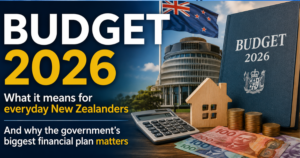
New Zealand’s political focus is now turning toward Budget Day 2026, one of the most important events of the year for the government, economists, businesses and ordinary households alike.
On Thursday, Finance Minister Nicola Willis will officially unveil the government’s financial plan for the coming year, explaining where billions of taxpayer dollars will be spent, where cuts will happen and what priorities the coalition government believes matter most for the country’s future.
While Budget Day is often seen as a major political event filled with speeches, debates and headlines, experts say its real impact is much bigger because it directly affects public services, infrastructure projects, welfare support, healthcare, education and the wider economy.
In simple terms, the Budget is the government’s yearly financial roadmap. It outlines how much money the country plans to spend, where that money will come from and how the government intends to manage debt, taxes and economic pressures.
This year’s Budget arrives at a difficult time for New Zealand’s economy, with the government repeatedly warning the country remains under financial pressure following years of high inflation, rising debt and global economic uncertainty.
Finance Minister Nicola Willis has already signalled there will be “no splashing the cash”, indicating the government plans to tightly control new spending rather than announce large-scale public giveaways.
At the same time, the coalition is expected to increase investment into long-term infrastructure projects such as roads, hospitals, schools, defence and transport networks.
The government has reduced its operating allowance — the pool of money available for new ongoing programmes — to $2.1 billion, far lower than the levels seen during previous Labour-led budgets.
However, capital spending is expected to rise sharply, with the government planning billions in one-off infrastructure investments aimed at boosting long-term economic growth.
Prime Minister Christopher Luxon has described Budget 2026 as being focused on “fiscal repair” while also preparing New Zealand for future growth.
The government’s long-term goal remains reducing national debt and returning the country’s books back into surplus by the 2028-29 financial year.
Economists say the challenge facing the government is balancing spending cuts with public expectations during a period when many families are already struggling with living costs, rents, mortgage pressure and expensive groceries.
Political analysts also point out that this year’s Budget carries additional significance because New Zealand heads toward a general election later this year.
Experts believe the coalition government will attempt to use the Budget to convince voters it can responsibly manage the economy while also investing in future development projects.
At the same time, opposition parties are expected to closely scrutinise every major spending decision and highlight areas where they believe ordinary New Zealanders are missing out.
Budget Day itself is also one of Parliament’s most tightly managed political events.
Before the official announcement, journalists and financial analysts are placed into a secure “lock-up” session inside Parliament where they receive early access to Budget documents under strict embargo conditions without phones or internet access.
Once the embargo lifts at 2pm, the government releases all Budget details publicly and Parliament begins hours of debate between political parties over the country’s financial direction.
Experts say beyond the political theatre and economic terminology, the real question many New Zealanders will ask is simple — whether Budget 2026 will genuinely improve daily life for families, workers, businesses and communities already facing financial pressure.
Many economists argue future budgets must move beyond simply discussing numbers and debt levels and instead explain what kind of country New Zealand aims to become over the next decade.